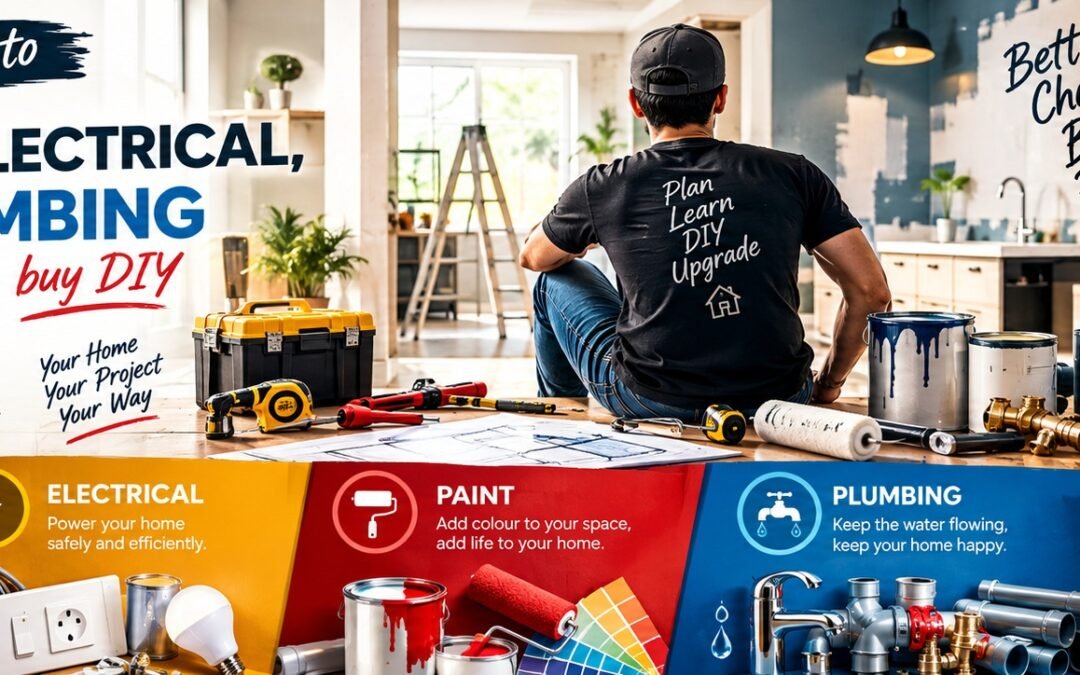
Your DIY Guide Starts Hear
Choose the right Hardware,Electrical,Paint & Plumbing Products for every Project

Hardware, electrical, paint, and plumbing are important home improvement essentials. Understanding basic hardware tools, electrical basics, different paint types, and plumbing fundamentals can make everyday repairs easier.
Whether you’re fixing a small problem or starting a DIY home repair project, knowing the basics helps you choose the right products and complete the job safely and effectively.
Choosing the right hardware can make your home projects easier and stronger.
Simple hardware selection tips, knowing different tool types, and choosing the right screws and nails can make a big difference.
From door handles and hinges to everyday home hardware supplies, using the right products helps get the job done properly.
Basic knowledge of electrical wiring can help homeowners handle simple electrical tasks safely.
Learn about circuit breakers, electrical outlets, and wiring tools, and always follow basic safety precautions.
Regular electrical maintenance can also help prevent problems and keep your home safer.
Electrical Basics for Homeowners
- Electrical wiring: Check for damaged or loose wires.
- Circuit breakers: Make sure breakers are working properly.
- Electrical outlets: Avoid overloading sockets.
- Safety precautions: Switch off the power before any repair.
- Wiring tools: Use the correct tools for electrical work.
- Electrical maintenance: Get regular checks to prevent problems.
Selecting and Applying Paint for Different Surfaces
Choose the right paint type based on the surface and location. Use primer for a smooth finish, prepare the surface properly, and apply the paint evenly with brushes or rollers for the best results.
Choosing the Right Paint
- Paint types: Choose paint based on the surface and location.
- Interior & exterior paint: Use the right paint for indoor or outdoor areas.
- Primers: Apply primer for a smoother and longer-lasting finish.
- Brushes & rollers: Pick the right tool for an even coat.
- Surface preparation: Clean and smooth the surface before painting.
- Paint application: Apply thin, even coats and allow proper drying time.
Common Plumbing Problems at Home
Plumbing problems can range from small dripping taps to blocked drains and leaking pipes.
A dripping faucet may waste water and should be repaired when possible. Blocked drains can often be caused by hair, food particles, grease, or other materials entering the drainage system.
Low water pressure, leaking pipes, unpleasant smells, and slow drainage can also indicate plumbing problems.
Small maintenance tasks can sometimes be handled by homeowners, but major leaks, damaged pipes, sewer problems, or water heater issues should be checked by a qualified plumber.
Plumbing Essentials: Tools, Fixtures, and Common Repairs
Basic plumbing tools, pipe fittings, and faucets are useful for everyday home repairs. Simple tasks like leak repair and drain cleaning can prevent bigger problems. Regular plumbing maintenance also helps keep water heaters and other fixtures working properly.
Plumbing Essentials
- Plumbing tools: Keep basic tools ready for small repairs.
- Pipe fittings & faucets: Choose the right size and type.
- Leak repair: Fix leaks early to avoid water damage.
- Drain cleaning: Clean blocked drains regularly.
- Plumbing maintenance: Check water heaters and fixtures regularly.
Water-Saving Plumbing Tips

Saving water is useful for both the environment and household expenses.
Fix leaking faucets and pipes as soon as possible. Avoid allowing water to run unnecessarily while brushing teeth, cleaning, or doing other daily activities.
Installing efficient faucets, shower fittings, and other water-saving fixtures can also help reduce water consumption.
Regular plumbing maintenance can identify leaks and other problems before they cause unnecessary water loss.
Integrating Hardware, Electrical, Paint, and Plumbing for Successful Renovations
A successful renovation needs good planning and the right materials. Coordinate hardware, electrical, paint, and plumbing work properly to avoid delays. With simple home renovation tips and proper project planning, even a DIY renovation can be easier and more organized.
How to Prepare a Surface Before Painting
Good surface preparation is one of the most important steps in any painting project.
Before applying paint, remove dust, dirt, grease, and loose material from the surface. Fill cracks and small holes where necessary, then sand uneven areas to create a smoother surface.
Primer can help create a suitable base for the final paint and can improve the overall appearance of the finished surface.
Cover furniture, floors, windows, switches, and other areas that should not receive paint. Good preparation can reduce mess and help produce a cleaner result.
A successful renovation starts with good planning and the right materials.
- Home renovation tips: Plan each step before starting.
- Project planning: Set a budget and timeline.
- Materials coordination: Make sure hardware, electrical, paint, and plumbing work together.
- Contractor advice: Get professional help for complex work.
- DIY renovation: Handle simple tasks yourself when you have the right skills and tools.
How to Choose Quality Home Improvement Materials
Choosing the right products is important for long-lasting home improvement work.
Do not choose materials based only on the lowest price. Consider product quality, durability, compatibility, size, warranty, and intended use.
For hardware, check the material and dimensions. For electrical products, choose suitable and approved products. For paint, consider the surface and environmental conditions. For plumbing products, make sure fittings and pipes are compatible.
Buying the correct product the first time can save both money and time.
Home Maintenance Checklist
Regular home maintenance can help keep hardware, electrical systems, paint, and plumbing in good condition.
A simple maintenance checklist can include:
- Check doors and hinges.
- Tighten loose screws and handles.
- Inspect visible plumbing for leaks.
- Clean drains regularly.
- Check faucets and pipe connections.
- Look for damaged paint or cracks.
- Check electrical outlets for visible damage.
- Keep tools clean and organized.
- Check outdoor areas for water damage.
- Arrange professional inspections when required.
Creating a Practical Home Improvement Budget
A budget is an important part of any renovation or repair project.
Before starting, estimate the cost of hardware, electrical materials, paint, plumbing supplies, tools, labor, and transportation.
It is also useful to keep some additional budget for unexpected repairs or extra materials. Compare products based on quality and suitability instead of focusing only on price.
A clear budget can help prevent unnecessary spending and keep the project organized.
Safety Tips for DIY Home Repairs

DIY projects can be useful for simple home improvements, but safety should always come first.
Wear suitable protective equipment when using tools, paint, or construction materials. Safety glasses can protect your eyes from dust and particles, while gloves can provide protection during certain tasks.
Keep electrical work separate from wet areas and never work on electrical systems when power is still connected. Keep children away from tools, chemicals, electrical components, and construction areas.
Read product instructions before using paints, adhesives, tools, or other materials.
If a repair involves electrical wiring, gas, major plumbing, structural work, or other potentially dangerous systems, professional assistance is recommended.
Keeping Your Home Safe and Well Maintained
Home improvement is not only about making a property look better. It is also about improving safety, comfort, durability, and functionality.
Strong hardware can improve doors and furniture. Proper electrical maintenance can reduce electrical risks. Quality paint can protect surfaces and improve appearance. Good plumbing maintenance can help prevent leaks and water damage.
By paying attention to these four important areas, homeowners can maintain their property more effectively.
Conclusion: Mastering Hardware, Electrical, Paint, and Plumbing for a Safer, More Beautiful Home
Hardware, electrical, paint, and plumbing are essential parts of a well-maintained home. Understanding the basics can help homeowners make better decisions, complete simple projects, and recognize when professional help is needed.
From choosing the right hardware tools and electrical products to selecting suitable paint types and plumbing supplies, every material has an important role in home improvement.
Good planning, quality materials, proper maintenance, and attention to safety can make renovation and repair projects easier and more successful.
Whether you are completing a small DIY home repair, refreshing a room, fixing a plumbing problem, or planning a larger renovation, start with a clear plan and choose the right products for the job.
With the right knowledge and preparation, you can improve your home’s functionality, appearance, comfort, and long-term value while keeping safety at the center of every project.